Liter[r]a [en]
In Latin, the word litera refers to both a graphic symbol and the entire body of literary works. Literature is an important and special form of culture – both dialogic and self-reflective. This unique quality manifests on an individual, social, intercultural and geopolitical levels. Hence the significance of efforts to ensure mutual cross-fertilisation of literatures from different linguistic areas and intensive circulation of literary works on a global scale. Liter[r]a is our expression of care and efforts to promote Polish literary works abroad and support people who are able to take on literary translation challenges: linguistic, cultural, artistic, social and political.
In a world where communication increasingly assumes the form of slogans and memes, literature provides us with a unique opportunity to understand ourselves and each other to the fullest, also across borders. The Liter[r]a series of translation workshops and author meetings consists of events devoted to contemporary Polish literature, organised in most important cultural and academic centres in Europe: Paris, Berlin, Madrid, Amsterdam, Sofia, Lviv, Granada and Oslo.
The dialogic dimension of literature is reflected in the very formula of Liter[r]a events, where we host the co-creators of the intercultural literary dialogue, i.e. authors and translators of their works. During specialist translation workshops, their dialogue will be shared with university students of the Polish language and culture, translation trainees and people keen to explore such professional opportunity. The evening meetings with authors, which are open to a wider audience of experts curators, academics, media and, above all, the community of readers, provide space for an in-depth discussion of the vital role of literary translation as a form of co-creation of contemporary literary texts, as well as the reception and the dialogic potential of Polish literature in individual countries and language areas.
The Liter[r]a series is an initiative of the Olga Tokarczuk Foundation, implemented in cooperation with foreign partners, with the financial support of the Polish Ministry of Culture and National Heritage within the Promotion of Polish Culture Abroad programme for 2026.
On the 29th of September 2026, the Centro de Culturas Eslavas at the University of Granada will be hosting our advanced literary translation masterclass based on the forthcoming Spanish edition of Gorzko, gorzko, by the author Joanna Bator and the translator Xavier Farré.
Gorzko, gorzko (2020) is an ambitious family saga centred on women, set in Polish Lower Silesia and spanning more than a century of history. The plot follows the lives of four generations of women from the same family (Berta, Barbara, Violetta and Kalina), united by their quest for love and freedom, and the experience of violence, loss and transgenerational trauma. The story is told by Kalina, the representative of the latest generation, who decides to piece together her family’s past, to understand her own identity and come to terms with her broken heart. Through her inquiries in Wałbrzych and Sokołowsko (formerly Görbersdorf), Kalina unearths the light and shadow in the lives of her ancestors: her great-grandmother Berta, scarred by a terrible crime in her youth; her grandmother Barbara, a solitary woman trapped in a hostile environment; and her mother Violetta, an absent and eccentric figure. Joanna Bator captivates her readers with an intense and highly evocative style that blends the dark atmosphere of the Gothic novel with the charm of magical realism. In this saga, steeped in mystery, she portrays four generations of strong women battling the traumas of the past, unbridled love and violence. This rich and evocative narrative grips the reader from the very first page.
On the same day, in the evening of September 29, 2026, the authors’ meeting with Joanna Bator and Xavier Farré will be hosted by the independent library “El Tiempo Perdido” and moderated by Nina Kressova Iordanishvili.
Liter[r]a – Literary translation masterclass led by Joanna Bator and Xavier Farré
Date: 29.09.2026, 10:00 am – 14:00 pm
Venue: Sala de Reuniones del Palacio de los Condes de la Jarosa (Calle Paz, 18, 1ª planta)
Format: hybrid (on-site/on-line)
Please register at: https://cceslavas.ugr.es/form/inscripcion-en-talleres-del-cent
- Link: https://ugr.zoom.us/j/2409677778?omn=99211934293
- Meeting ID: 2409677778
- Password: 29092026
Liter[r]a: Author’s meeting with Joanna Bator and Xavier Farré hosted by Nina Kressova Iordanishvili
Date: September 29, 2026 at 8:00 pm
Venue: “El Tiempo Perdido”
1. Puentezuelas, 49a, 18002 Granada, España
https://www.libreriaeltiempoperdido.com/
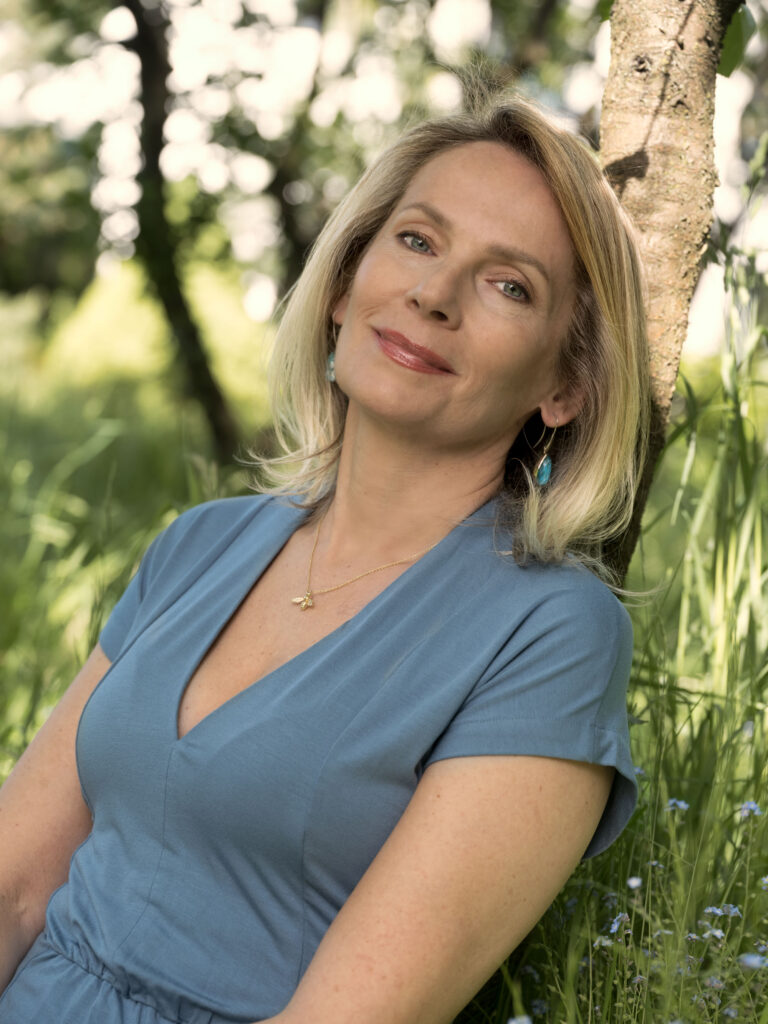
Joanna Bator – Polish novelist, journalist, and academic known for her powerful fiction exploring memory, identity, and family secrets. She holds a PhD in Philosophy from the Polish Academy of Sciences awarded for her pioneering research into feminist theories, psychoanalysis and postmodernism. She has taught at prestigious institutions in Warsaw and held research fellowships at universities in London, New York and Tokyo. She has written a number of books, both fiction and non-fiction. Her novels The Japanese Fan and Sandy Mountain have received wide acclaim, with the latter nominated for the prestigious Gdynia Literary Prize and Nike Award. She won the Nike Award in 2013 for her novel Ciemno, prawie noc(Darkness, Almost Night). In 2014 she was the second Friedrich Dürrenmatt Guest Professor for World Literature at the University of Bern. In 2015, she was awarded the Silver Gloria Artis Medal for Merit to Culture; in 2018, together with her translator Esther Kinsky – the Calw Hermann Hesse Prize; and in 2024 – the Austrian Prize for European Literature.
fot. Magda Hueckel
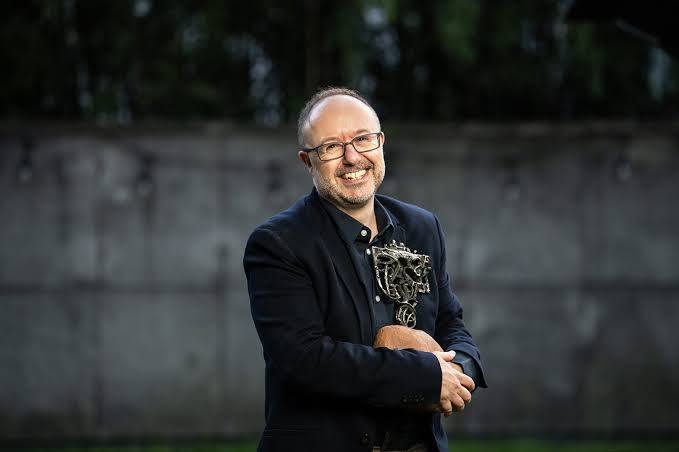
Xavier Farré is a poet and translator of Polish and Slovenian literature into Catalan and Spanish. He has published seven volumes of poetry and a collection of essays, Auditorium in Görlitz, about poetry and its connections with identity, exile and the Holocaust. He has translated books by Julia Hartwig, Zbigniew Herbert, Wioletta Grzegorzewska, Stanisław Lem, Czesław Miłosz, Tomasz Różycki, Olga Tokarczuk, Adam Zagajewski, and other authors. He has also translated plays by Aleš Debeljak, Lojze Kovačič, Krystian Lupa, Dorota Masłowska, Tomaž Šalamun, Ingmar Villqist and Krzysztof Warlikowski. He is the laureate of the Jaume Vidal Acovera for the Catalan translation of a selection of poems by Czesław Miłosz and the winner of the Jordi Domènech Award for the Catalan translation of Zbigniew Herbert’s Pan Cogito. In 2025, he also became the laureate of the 21st edition of the Transatlantyk Prize, the most important distinction awarded annually by the Book Institute to the most outstanding promoters of Polish literature and culture abroad.
fot. Instytut Książki
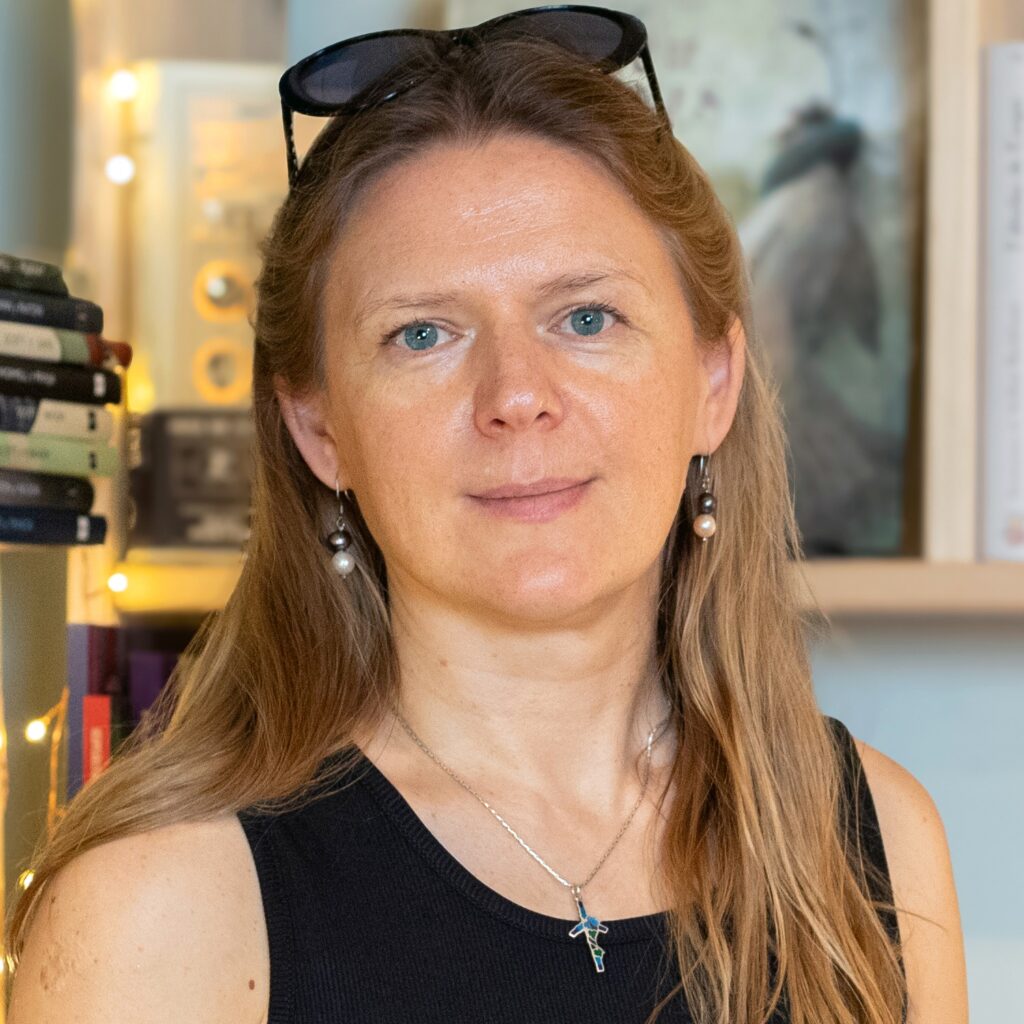
Nina Kressova Iordanishvili is a philologist, holds a PhD in Comparative Literature and is the coordinator of the Centre for Slavic Cultures at the University of Granada. Throughout her research career, she has conducted studies and published articles and book chapters in the fields of Russian literature, comparative literature and discourse analysis. She has edited several research books and is the author of a monograph on the comparative analysis of the works of Vladimir Nabokov and Jorge Luis Borges. As a researcher and cultural ambassador, she focuses her work on the promotion and dissemination of Slavic literatures and those of Eastern European countries.