Liter[r]a is a series of four translation masterclasses for university students and four open meetings with Polish writers and the literary translators into French, German, Spanish and Dutch, held in Paris, Berlin, Madrid and Amsterdam.
Literra – Promoting Polish Culture Abroad
‘Litera’ in Latin denotes both a graphic sign and the entire body of literary works. ‘Terra’ means land, our shared home and the culture we create. However, literature is an essential and particular manifestation of our culture – both dialogical and self-reflective. Its special character manifests in many different dimensions: the writer’s individual expression and the equally individual reception by their readers, the wider impact of literature on the societies of a given linguistic area, the intercultural dialogue it facilitates and, last but not least, the geopolitical processes that stem from it.
This is why we consider it to be of utmost importance to ensure mutual interpenetration of literatures from separate, though often neighbouring linguistic areas, to facilitate dialogue between authors and readers, and to enable works originating from different countries to be part of the world literature. With this in mind, the Liter[r]a project sought not only to promote Polish literary works abroad, but also to support those capable and willing to apply themselves to literary translation, which requires attention not only to linguistic and cultural, but also to artistic, social and political aspects.
Literary translation involves advanced linguistic and cultural competences, artistic sensitivity, knowledge and rigorous observance of the rules that make us consider a literary work translated into a different language to be the same as the original. It also involves a number of other activities undertaken by literary translators to promote the books they translated, often paving the way for the author in a new and unfamiliar publishing ecosystem, and promoting the culture and literature of the entire country from which the work originates. In this context, it is indeed alarming that the faculties of Polish philology at universities abroad now tend to be bundled together with other departments under a general label of Slavonic studies, and that the whole discipline seems to be increasingly underfunded. Equally worrying is the widespread shift in the situation of literary translators: until recently, the vast majority of such experts carried out their translation activities in conjunction with their professional career, mostly at universities, in full-time employment, while now their employment tends to be much more precarious. Within our project, the direct, in-depth dialogue between authors, the practitioners of literary translation and both expert and general audiences will also facilitate a diagnosis of the current situation and its potentially dire consequences.
Project objectives
The aim of our project was to enhance the skills of future translators of Polish literature into other languages and to promote important literary phenomena emerging in our country. To this end we planned four translation masterclasses for students of Polish philology at universities in Paris, Berlin, Madrid and Amsterdam, as well as meetings with authors in these cities, to which we invited wider expert and general audiences.
The authors and translators shared their reflections and discussed important aspects of the collaborative literary translation process. The discussions were grounded in their common experience of working on a specific book project. Author meetings – conversations between writers and literary translators, open to the public and hosted by prestigious cultural venues in respective cities – formed the second, equally important ‘leg’ of the Liter[r]a project. In this way, we managed to achieve an important synergy of activities: developing skills and inspiring people to consider literary translation of Polish literature as a career option and highlighting specific, vital new phenomena within the Polish literature.
Masterclasses and author meetings
Masterclasses in literary translation were open to those who consider high-quality literary translation as a possible career choice. For Polish language scholars, students and aspiring literary translators, a conversation between prominent authors and translators can be both eye-opening and inspiring, not least by highlighting the richness of meaning and complexity of the Polish literary language. The dialogue between the invited guests facilitated and always developed into a debate, which gave the participants an opportunity to enhance their individual knowledge of Polish literature and their linguistic sensitivity and expertise, to ask questions, and to get to know each other and the wider network of Polish language experts in their city and country.
Literra in Paris – Mikołaj Grynberg and Margot Carlier
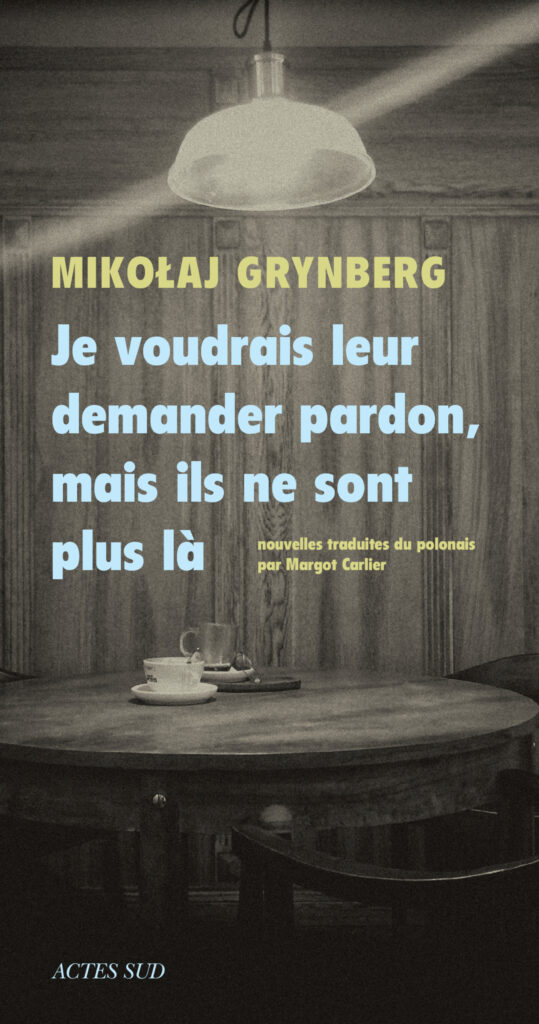
On 26 March 2025 in Paris, at the Sorbonne, we organized the translation masterclass co-led by Mikołaj Grynberg and Margot Carlier, based on the French translation of Rejwach (Je voudrais leur demander pardon, mais ils ne sont plus là, published by Actes Sud, 2023). Students and scholars at the Polish language and literature department had the opportunity to learn about the practicalities and nuances of the translation project on Grynberg’s collection of several dozen texts that constitute a poignant, multi-layered story about Jewish and Polish experience in the context of the second and third generations after the Holocaust. During the masterclass, the author and the translator highlighted the significance of the fact that these ‘small, penetrating prose pieces’, in addition to their purely literary value, also adress significant cultural and identity aspects that are salient in contemporary Poland. The masterclass was attended by 21 participants, and was organised with the invaluable support of Sorbonne lecturers, Professor Małgorzata Smorąg-Goldberg and Patrick Rozborski. The Olga Tokarczuk Foundation team was also present to record the entire workshop for further educational purposes. We also recorded the evening meeting with the writer and the translator, held in La Librairie polonaise de Paris, attended by more than 90 readers and moderated by Oriane Jeancourt Galignani, the editor of Transfuge magazine. The meeting was kindly and generously hosted by the Polish Library’s director, Ms Katarzyna Maciejewska and her staff.
The launch of the Liter[r]a project in March 2025 was particularly memorable, as it coincided with Olga Tokarczuk’s honorary doctorate award ceremony at the Sorbonne University.
Literra in Berlin, Madrid and Amsterdam
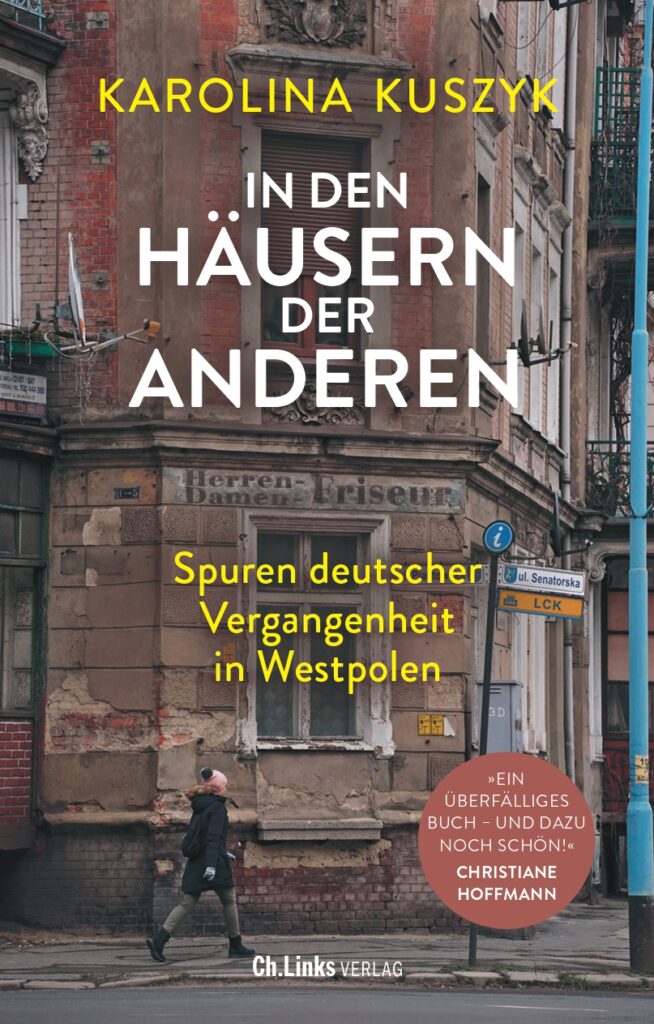
On the 21th of May 2025, translation masterclass co-led by Karolina Kuszyk and Bernhard Hartmann were held at Humboldt University in Berlin. The discussion was based on the German translation of the book Poniemieckie (In den Häusern der anderen. In den Häusern der anderen. Spuren deutscher Vergangenheit in Westpolen, published by Christoph Links Verlag). Karolina Kuszyk’s book focuses how the foreign becomes familiar. It presents a new perspective on the complex history of Polish-German relations, recounted through the biographies of everyday objects and houses, silent witnesses to the absence of their former owners. The intertwined fates of objects and people described in Kuszyk’s reportage, reconstructed based on accounts provided by those who resettled the new Polish lands following WWII, interviews with experts and German treasure hunters, and conversations with representatives of three generations living in former German houses, sparked a lively discussion in Poland about German heritage. In 2024, Karolina Kuszyk and Bernhard Hartmann received the Georg Dehio Prize, awarded annually to authors and books that contribute to the popularisation of German culture and history in Central and Eastern Europe. In 2020, Kuszyk was also also awarded the Arthur Kronthal Prize by the Commission for the Study of the History of Germans in Poland, based in Marburg. Seven future translators currently studying at Slavic studies institutes at Humboldt University and the University of Potsdam took part in the advanced masterclass session on Wednesday morning, which was then followed by an evening meeting with the author and translator, held in the Jacob-und-Wilhelm-Grimm-Zentrum auditorium of the Universitätsbibliothek. The meeting was expertly moderated by Brigitta Helbig-Mischewski and attended by nearly forty people, who then took part in the lively discussion that followed the official part of the meeting.
On the 21st of October 2025, the Círculo de Bellas Artes in Madrid hosted our advanced literary translation masterclass based on the Spanish edition of Łakome (Insaciable, Temporal 2025) led by the author Małgorzata Lebda and the translators Abel Murcia and Katarzyna Mołoniewicz. The first book of prose of a distinguished Polish poet is a vivid and sensual account of a gradual loss of life, where life itself, when juxtaposed with death, becomes even more vital. Personal, written in a language honed by poetry-writing, of apparent simplicity, blurring the boundaries between human and non-human life forms, it speaks of the paradoxes of a disease hungry for life, of the beauty and the horror that always coexist in nature.
The evening authors’ meeting with Małgorzata Lebda, Abel Murcia and Katarzyna Mołoniewicz was hosted on the same day in Círculo de Bellas Artes de Madrid by Eva Orúe, the director of the Madrid Book Fair.
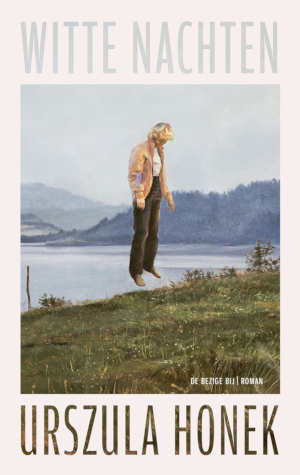
On November 14, 2025 in Amsterdam, we organized the last two events of this year’s cycle of the Liter[r]a project, kindly hosted by the University of Amsterdam – Faculty of Humanities and SPUI25. The morning literary translation masterclass, held in one of the magnificent seminar rooms of the PC Hoofthuis, Spuistraat 134, was co-led by the author Urszula Honek and Charlotte Pothuizen, the translator behind the Dutch version of White Nights. Their Witte Nachten (De Bezige Bij 2025) was the locus of their reflection and theoretical and practical discussion about the literary translation process. As a poet migrating towards prose, Honek retains her poetic discipline, which manifests in pauses, concise verses and understatements. Her afterimage-stories, familiar to readers of her poetry, open up additional perspectives, and the entire volume is a saga about a place where the fates of humans and animals and the fate of the land intertwine in very specific ways. Each memory preserves different elements of the story, leaving everyone with their sovereign right to history. The narrative unfurls using resonant language rich in metaphors. Honek frequently suspends the definitive conclusion of her stories, leaving them open-ended.
The session was the fourth translation masterclass offered as part of the Liter[r]a cycle, and we are happy to report that the seminar room was packed! We hope the masterclass will in due course contribute to the publication of more and more books by Polish authors translated into Dutch.
In the evening, we invited the general public to the authors’ meeting at SPUI25, in the very heart of Amsterdam, where Niña Weijers lead a discussion with Urszula Honek and Charlotte Pothuizen. The meeting was held in both Dutch and Polish, with flawless interpretation delivered by Anna Rosłoń.
We would like to thank our guests and the readers who joined us at SPUI25. We extend our heartfelt thanks to the University of Amsterdam and SPUI25 for their hospitality and assistance in organizing the masterclass and the evening event.
We also invite you to have a look at the photographs we took during both events, and watch the recording of the authors’ meeting on our YouTube channel.
The events in Amsterdam marked the fourth and final part of the Liter[r]a cycle of translation masterclasses and authors’ meetings. We look forward to promoting Polish contemporary literature in other language areas next year.
Project Partners

This project is co-financed by the Minister of Culture and National Heritage of the Republic of Poland from the Culture Promotion Fund.